
Hello, I’m Sujin Joanna. I am an apparel designer with about a decade of industry experience and also a computer scientist. I’m currently pursuing a Ph.D. in Computer Science at Brown University as a member of the Brown Visual Computing Group. I am advised by Dr. Adriana Schulz and Dr. Daniel Ritchie.
My research focus on the intersection of computer graphics and apparel design, with a focus on computational fabrication, physical simulation, interactive geometric modeling, and human–computer interaction (HCI). I am interested in developing both computational methods and novel apparel design methodologies that expand creative possibilities and promote more sustainable design and manufacturing practices. Further details on my academic background and experience are available in my CV.
❗️ I’m currently looking for Summer 2027 research internship opportunities 🙂
Warning
Problem: The current name of your GitHub Pages repository ("Solution: Please consider renaming the repository to "
http://".
However, if the current repository name is intended, you can ignore this message by removing "{% include widgets/debug_repo_name.html %}" in index.html.
Action required
Problem: The current root path of this site is "baseurl ("_config.yml.
Solution: Please set the
baseurl in _config.yml to "Education
-
 Brown UniversityPh.D. in Computer ScienceSept. 2026 – Present
-
 Cornell UniversityM.A. in Apparel Design with a Minor in Computer ScienceAug. 2024 - May 2026
-
 University of Southern CaliforniaB.S. Computer Science and Business AdministrationAug. 2021 - May. 2024
-
 Fashion Institute of Design & MerchandisingA.A. in Apparel DesignMar. 2015 - May. 2017
Experience
-
 InriaResearch InternFeb. 2026 – July. 2026CRAFT team, Grenoble, France
-
Cornell UniversityResearch AssistantAug. 2024 – May. 2026Cornell Fashion and Body Technology LabGraduate Student LecturerSummer 2025DEA 1140- Principles of Design ComputingTeaching AssistantFall 2024, Spring 2025FSAD 1450- Introduction to Fashion Design☑️ See my CV for the full list.
Honors & Awards
-
Recipient, Oris Glisson Fellowship (International Textile & Apparel Association)2025
-
1st Place – HCD Graduate Student Poster Contest, Cornell University2025
-
Recipient, Alan D. Mathios Research and Service Grant2024
-
Outstanding Team Project Award (Android App), awarded to 4 of 60 teams, USC2023
Publications (view all )
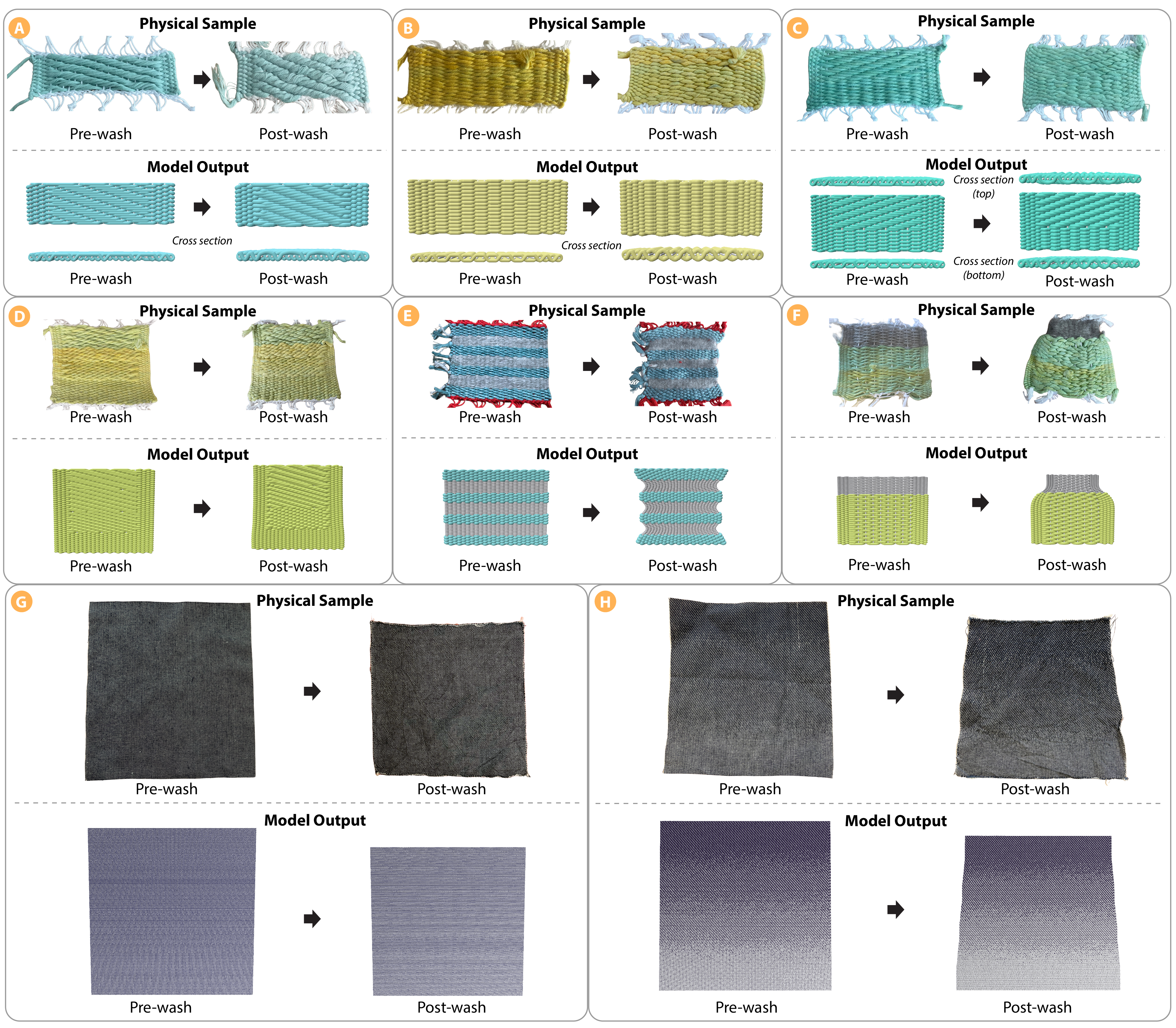
Modeling and Predicting Post-wash Shrinkage in Woven Fabric
Sujin Yoo, Milou Voorwinden, Richard Trézeux, Holly Mcquillan, Adrien Bousseau, Mélina Skouras
SCF 2026-ACM Symposium on Computational Fabrication
Accepted as a full paper at the 2026 ACM Symposium on Computational Fabrication (SCF). More updates coming soon!
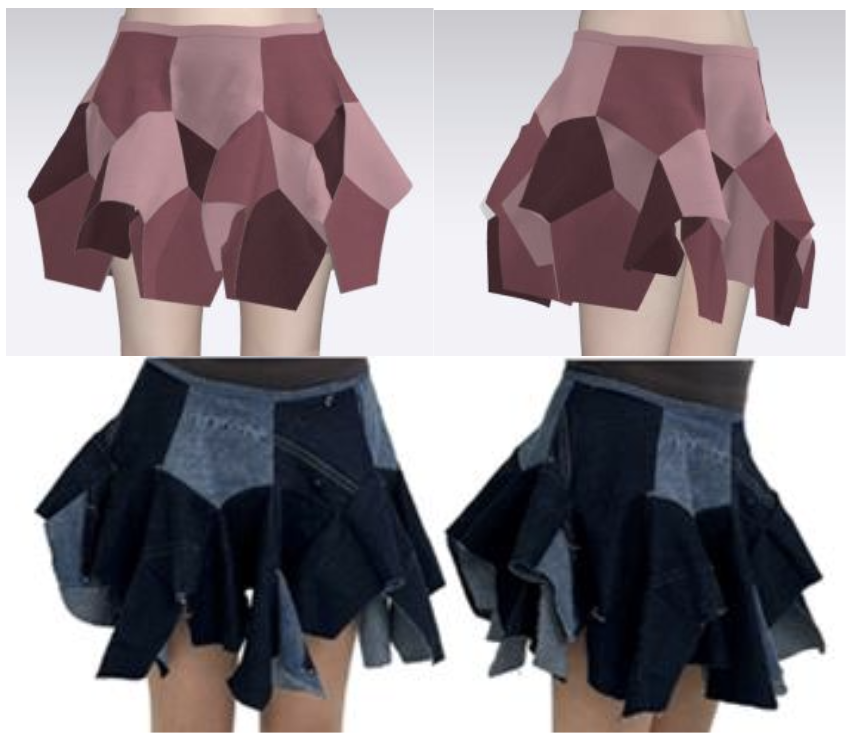
Hyperbolic Tessellation as a Method for Optimized Material Use in Garment Design
Sujin Yoo, Mia Lopez, Fatma Bayter
International Textile and Apparel Association (ITAA) Annual Conference Proceedings, 2026
Accepted for oral presentation at the 2026 International Textile and Apparel Association (ITAA) Annual Conference. More updates coming soon!
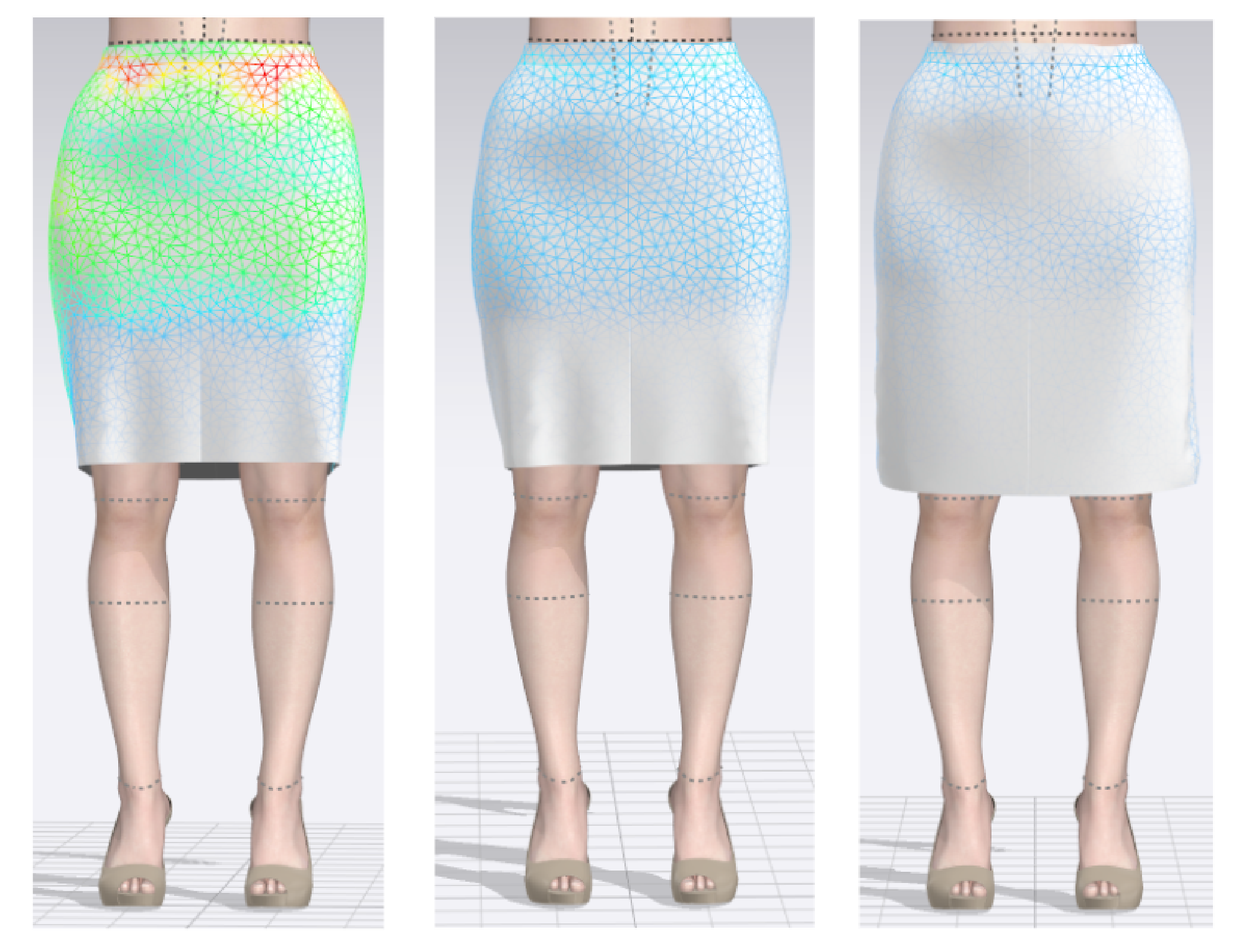
Designing an Interactive Size Chart to Improve Fit in DIY Garment Making
Sujin Yoo, Mia Lopez, Steve Marschner, Fatma Bayter
HCI International 2026 Posters. HCII 2026. Communications in Computer and Information Science
DIY garment making has seen a resurgence in interest over the past three decades and offers potential benefits for sustainable clothing practices. However, prior research indicates that home sewers frequently experience garment fit challenges, leading to frustration and material waste. As digital tools become more widely adopted, there is a growing need to explore how such technologies can support improved fit outcomes and sewing workflows. This study conducted a needs assessment with 50 female home sewers to identify key challenges and inform design implications. Based on these findings, we developed an interactive size chart integrated with a fit-adjustment tool and evaluated it through an in-person pilot study using usability testing, user experience questionnaires, and interviews. Results suggest that well-designed digital tools embedded within the sewing workflow can significantly improve garment fit outcomes while enhancing efficiency and user satisfaction. Future work will focus on developing a standalone system that supports a wider range of garments and on conducting evaluations with a larger, more diverse participant sample.

Implementing 3D Body Scanning Methods for Inclusive Swim Cap Design and Sizing
Fatma Baytar, Yoon Yang, Mona Maher, Ivania Rivera, Sujin Yoo, Saira Patel
Digital Human Modeling and Applications in Health, Safety, Ergonomics and Risk Management(HCII 2025)
Similar to protective headgear such as helmets, swim cap design and sizing for diverse hair types, particularly long and thick hair, remain a critical challenge in the sportswear and personal gear industries. Hair with structural characteristics such as coarseness and substantial volume often make conventional swim cap designs insufficient in accommodating hair dimensions. As a result, swim caps do not often provide functionality, such as keeping the hair dry or protecting it from chlorine or salt. This study explored the application of 3D scanning technology to develop methods for designing swim caps for individuals with different hair volumes...
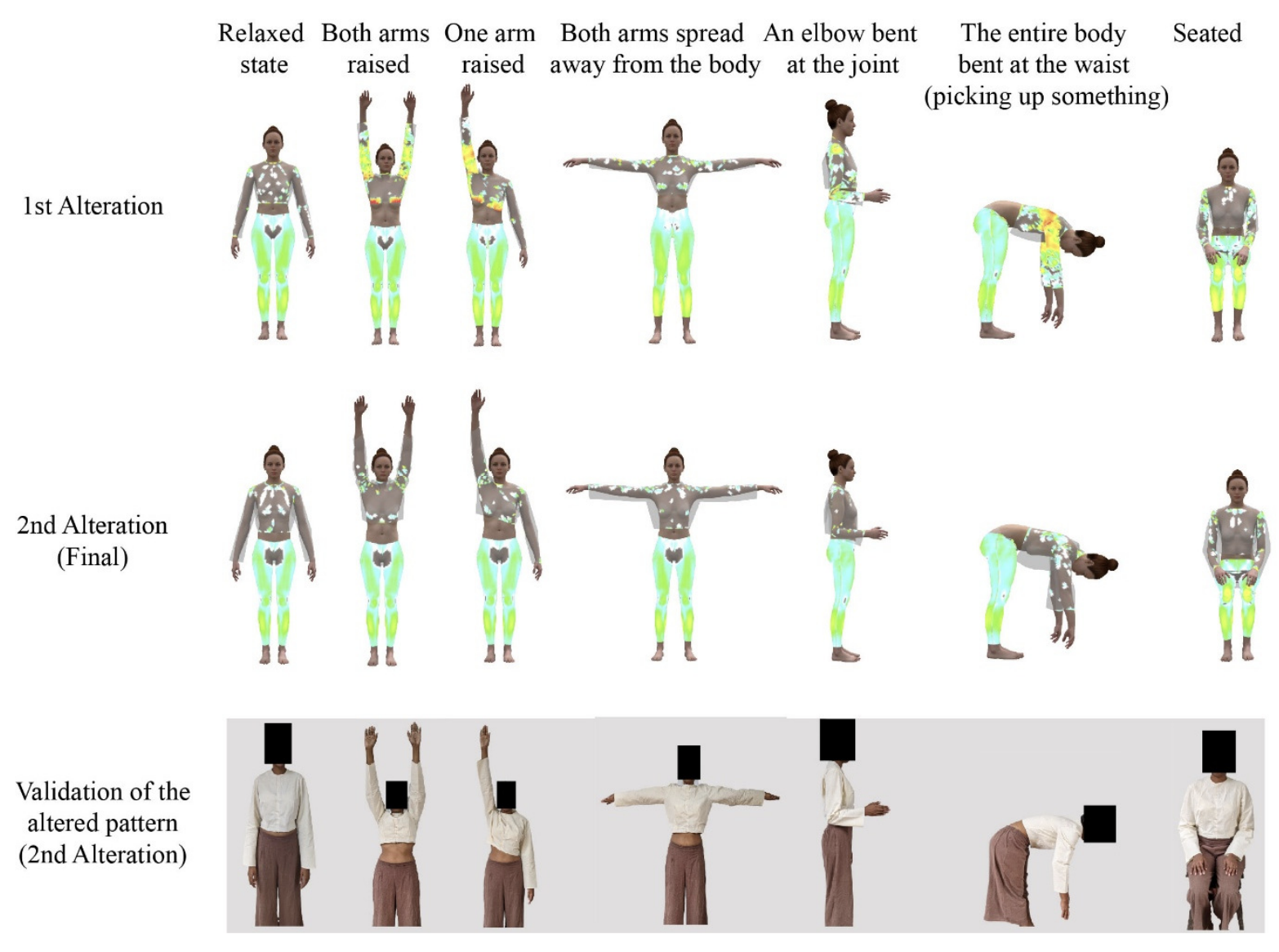
Posture Descriptors (PARCS), What We Know and the Gaps
Carol Mcdonald, P.U. Navodhya, Gerald Ruderman, Bonny Carmicino, Fatma Bayter, Mona Maher, Sujin Yoo
Proceedings of 3DBODY.TECH 2025 - 16th International Conference and Expo on 3D/4D Body Scanning, Data and Processing Technologies
Experienced pattern makers understand the nuances of body shape in their "fingertips". However, articulating and transferring this internalized knowledge to others is challenging due to the lack of shared language. It is important to bridge the gap in vocabulary and conceptual nuances within the field to enable effective collaborations among practitioners and researchers from diverse disciplines. Previously presented work on the role of posture in clothing design and fit described it by the mnemonic of PARCS: placement, alignment, rotation, curvature and symmetry. This mnemonic provides a language to describe intrinsic knowledge to understand body shapes and clothing design and makes it possible to talk about how garments are designed in a cross-disciplinary manner. However, there are still gaps in knowledge relating to posture...
More
Projects (view all )

SkirtSim: Skirt/Seam Simulator
#Cloth Simulation #Physical Simulation #Seam Modeling
This is a simple cloth simulation that models a circle skirt draping over a cone. It supports different fabric behaviors (denim vs. jersey) and seam effects (regular vs. French seam). Developed in Taichi (Python).
SkirtSim: Skirt/Seam Simulator
#Cloth Simulation #Physical Simulation #Seam Modeling
This is a simple cloth simulation that models a circle skirt draping over a cone. It supports different fabric behaviors (denim vs. jersey) and seam effects (regular vs. French seam). Developed in Taichi (Python).

ShapeMe: Custom 3D Avatars from Your Body Measurements, with OBJ Export
#Anthropometric Modeling #Avatar Generator
ShapeMe is a desktop application (distributed as an .exe) that lets you generate a custom 3D avatar based on one or more body measurements. The app reshapes a parametric body model in real time and allows you to export the result directly as an .obj file for use in 3D software, visualization, or apparel design workflows.

The Virtual Atelier: Interactive 3D Fashion Showroom
#Virtual Showroom #3D Graphics
The Virtual Atelier is an interactive 3D fashion showroom built with React and TypeScript, using the Anigraph package and rendered with WebGL. You can walk through the showroom, view clothing items, and express reactions. This project was my first experience working with shaders and building a 3D environment without using a game engine such as Unity or Unreal. To learn more, check out the git repo or try the live demo yourself!

SewFlex: Smart Pattern Adjustment Tool
#Parametric Pattern #Smart Pattern Adjustment #HCI
SewFlex was developed as a prototype to test whether a 2D smart pattern-adjustment tool could benefit home sewers with non-standard body types and people without professional patternmaking experience. Built on the FreeSewing API, SewFlex includes a user-friendly, detailed size chart for custom measurements, a pattern editor, and an AI assistant that provides real-time pattern-adjustment guidance and suggests fit changes based on user inputs and selected body type. Findings from this prototype are informing the development of a 3D smart pattern-adjustment tool now underway. SewFlex also won first place in the HCD Graduate Student Poster Contest at Cornell University.